April 9, 2026 · Michael
Boston Terrier Eye Care: What I Wish I Knew Before Getting Pippi
Those big, beautiful Boston Terrier eyes come with a daily maintenance routine nobody warns you about.
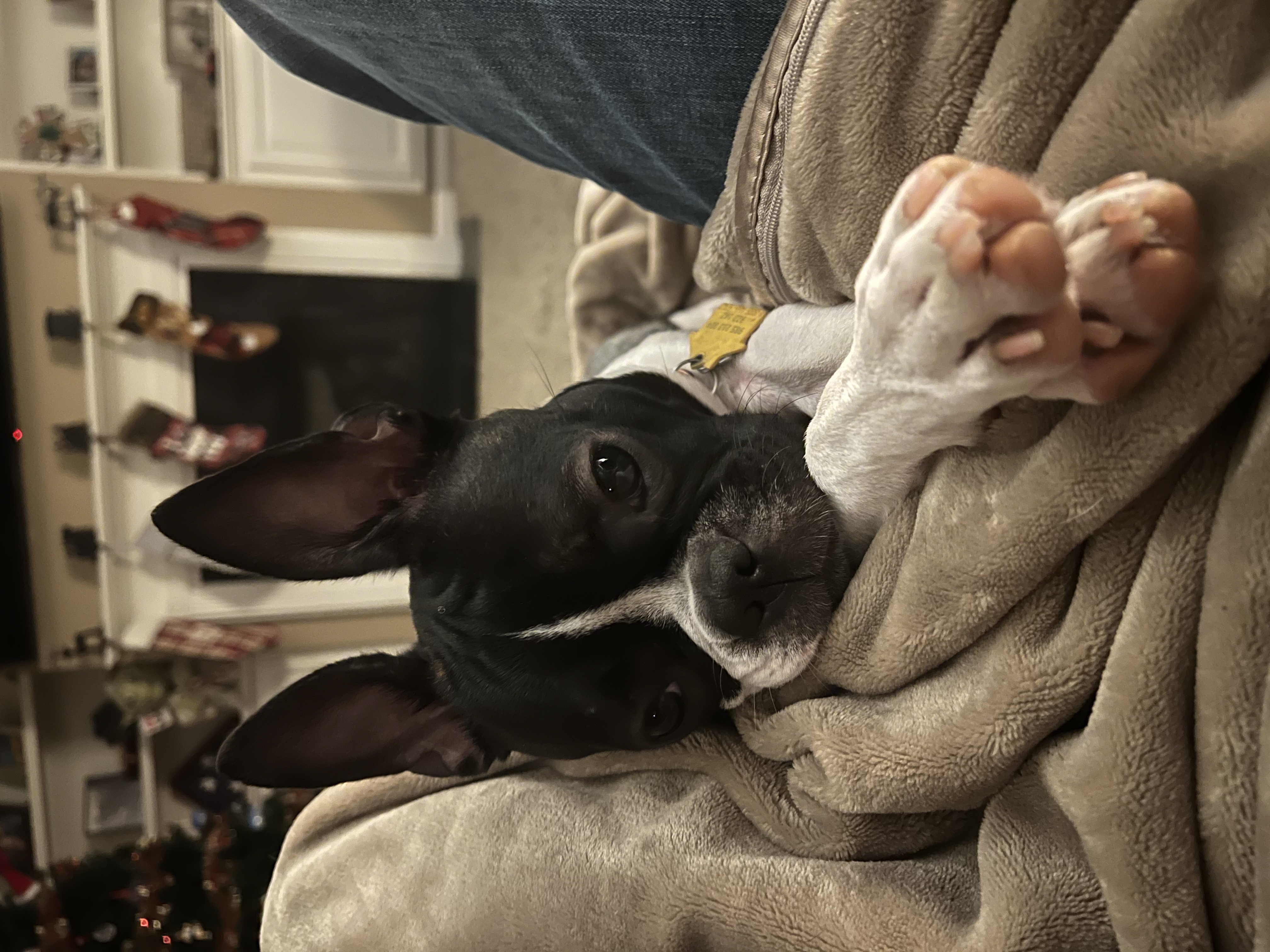
Nobody told me about the eyes. When I brought Pippi home, I knew about the snoring, I even knew about the gas. But the eye care caught me completely off guard. Honestly, it is the one thing I do every single day without fail as a Boston Terrier owner.
Why Boston Terrier Eyes Need So Much Attention
Boston Terriers have these big, gorgeous eyes that sit way more forward on their face than most breeds. It is what makes them so expressive and cute, but it also means their eyes are way more exposed to dust and irritation. Pippi's eyes water constantly. Not a little bit. Constantly. I have tear stains on every blanket, every pillow, and pretty much every shirt I own at this point.
Because their faces are flat, tears do not drain the way they do in longer snouted breeds. Instead of flowing down a nasal passage, the tears just run down their face. That moisture sits against the skin and if you do not stay on top of it, you get irritation and staining pretty fast.
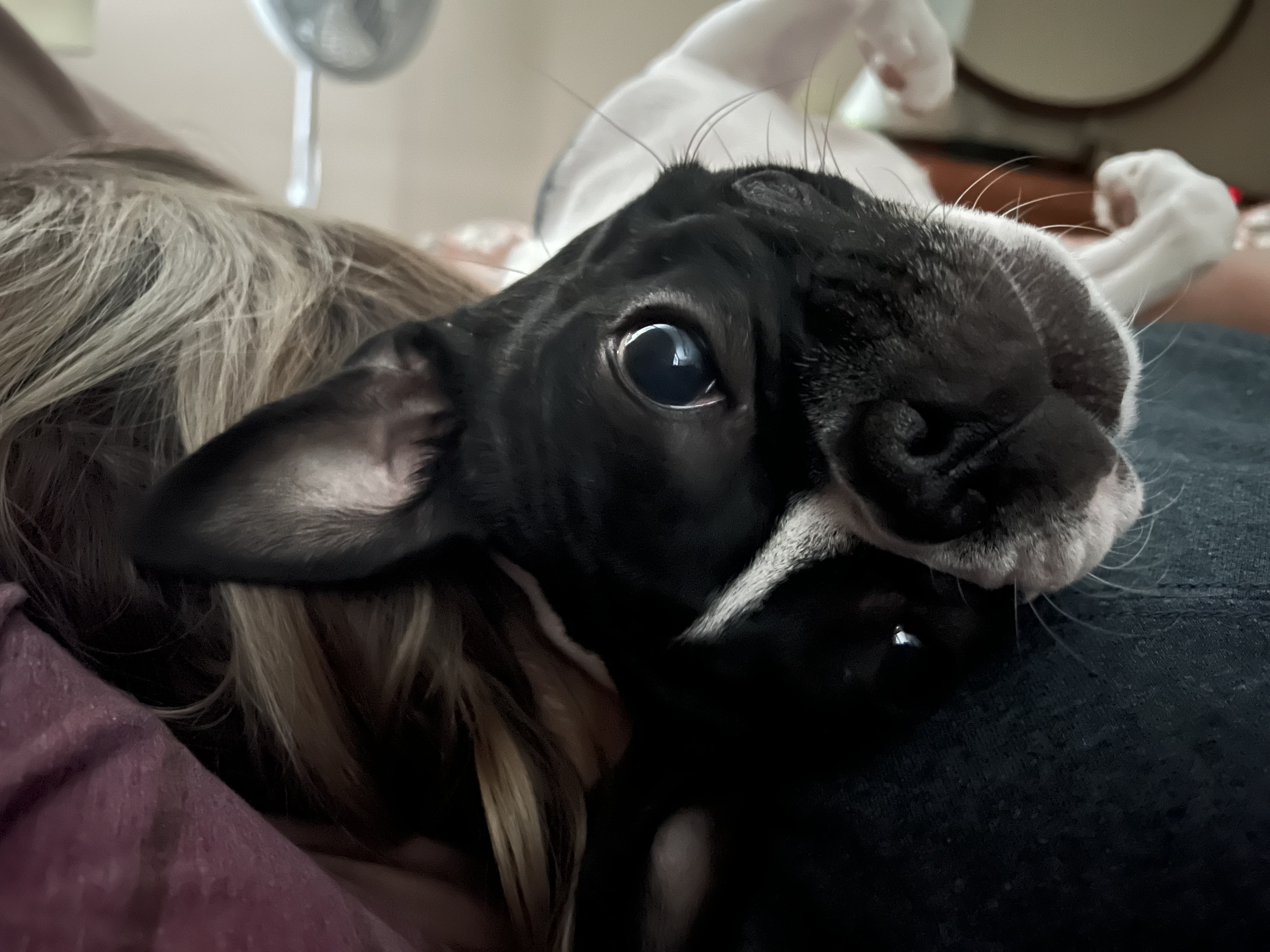
Those eyes are gorgeous. They are also a full-time job.
What Our Daily Routine Looks Like
Every morning, the first thing I do is wipe Pippi's eyes. I just use a soft damp cloth and gently clean around each eye, getting any crusty buildup from overnight. If I notice her pawing at her face during the day, I do another quick wipe. It takes like thirty seconds, but if you skip it for a few days, the irritation catches up fast.
The things I have learned over time: use a separate cloth for each eye so you are not transferring stuff between them. Just plain warm water, no soap or anything harsh. Be gentle around the corners where the gunk builds up. And pay attention to what the discharge looks like. Clear tears are totally normal. Yellow or green means you need to call the vet.
Boston Terrier eye care basics:
- • Wipe eyes at least once daily with a soft, damp cloth
- • Use a separate cloth for each eye to prevent cross-contamination
- • Clear discharge is normal; yellow or green means call the vet
- • Watch for squinting, redness, or pawing at the face
- • Keep grass and bushes trimmed where your BT plays to reduce debris
When to Worry
Most of the daily eye stuff is just cosmetic and comfort. But Boston Terriers are prone to real eye conditions too. Cherry eye, corneal ulcers, cataracts, and dry eye are all common in the breed. Because their eyes stick out more, they are just way more vulnerable to scratches and little injuries than most dogs. We have been lucky with Pippi so far, but I have talked to plenty of Boston Terrier owners who have dealt with eye surgeries and ongoing treatments.
The biggest thing I have learned is just do not wait when something looks off. A little redness that goes away in a day is fine. But if Pippi were squinting, holding one eye shut, or if the discharge changed color, we would go to the vet right away. We have not had to deal with that yet, but it is something I always keep an eye out for. Eye problems in Boston Terriers can get worse really fast, and catching them early is always cheaper and easier to deal with.
It sounds like a lot when you read it all at once, but honestly once it becomes part of your morning routine it is just thirty seconds. You get to know what is normal for your dog and then it is easy to spot when something is actually wrong.
See what health risks your breed is prone to
Free tool. 50+ breeds. Real veterinary data on conditions like eye problems, allergies, and more.
Check Your Breed's RisksDisclaimer: This post reflects my personal experience with Pippi and does not replace professional veterinary advice. If your dog has eye problems, consult your veterinarian.
Michael is the founder of Love Them Longer and Pippi's full-time human. He builds tools to help pet owners make better decisions about their pets' health.