April 9, 2026 · Michael
Boston Terrier Heat Sensitivity: How I Keep Pippi Safe in Summer
Brachycephalic breeds overheat dangerously fast. Here's what I have learned managing Kentucky summers with a Boston Terrier.

We took Pippi on a short walk in the park one day. The temperature was fine, nothing that felt hot to us, but it was pretty humid out. We were barely into the walk and she just started stopping. She kept pulling toward the shade and would not keep going. We ended up carrying her back to the car and letting her sit in the AC until she was back to normal.
It was not some dramatic emergency, but it was the moment I realized how sensitive Boston Terriers are to the weather. It did not even have to be hot. Just humid.
Why Boston Terriers Overheat So Fast
It comes down to their flat faces. Boston Terriers have shorter and narrower airways than longer snouted breeds. Dogs cool themselves by panting, and when the airway is all compressed like that, they just cannot move enough air to keep their temperature down. It is not something wrong with your specific dog. It is the whole breed.
Here in Kentucky, summers get hot and humid. The humidity makes it even worse because all that moisture in the air means panting does not cool them off as well. A dry 85 degree day is doable if you are careful. A humid 80 degree day can actually be dangerous.
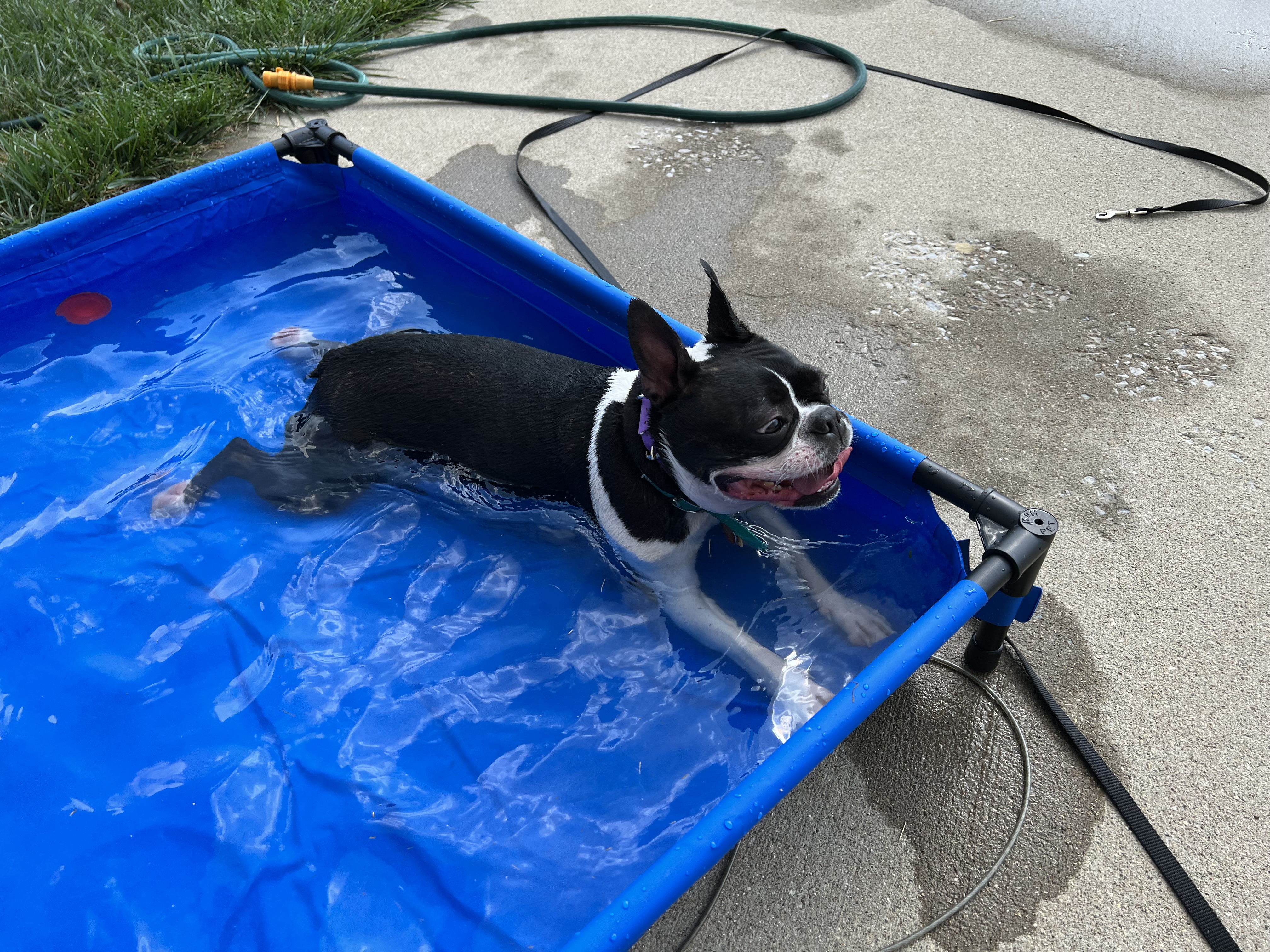
This pool was a $30 investment. Best money I have ever spent for summer safety.
How We Manage It
After that, I completely changed how we do outdoor time in the summer. Walks happen before 8am or after 7pm, period. If it is over 75 degrees and sunny, we keep it short and stay in the shade. I carry water on every walk, no exceptions.
And here is the thing that really gets people. It does not have to be hot for it to be dangerous. We have had 72 degree days in Kentucky where the humidity is so high that Pippi starts struggling on a walk. The temperature on your phone can look completely fine, but if the humidity is up there, your Boston Terrier is still at risk. I check both now before we go out. If it is humid, we keep it extra short even if the temperature seems nice.
At home, Pippi has a small plastic pool in the yard that she can hop in and out of whenever she wants. It cost about thirty dollars and it is genuinely the best purchase I have made for her. Air conditioning is not optional. If the AC goes out, Pippi goes to a friend's house or we sit in the car. I am not even exaggerating.
Heat safety rules for Boston Terriers:
- • Walk before 8am or after 7pm in summer, and check humidity too
- • Carry water on every walk, even short ones
- • Provide shade and a cooling pool for outdoor time
- • Never leave a Boston Terrier in a hot car. If your car has a climate mode like Tesla's Dog Mode, use it. Otherwise, do not leave them in there.
- • Watch for heavy panting, drooling, glazed eyes, or stumbling
Know the Warning Signs
Heatstroke in dogs can go from "she looks a little tired" to really serious in just a few minutes. The things to watch for are panting that will not slow down, thick drooling, bright red gums, glazed eyes, stumbling, or vomiting. If you are seeing any of those, get your dog to cool water and a vet right away. Do not wait around to see if they get better on their own.
I check the weather and the humidity every morning before planning Pippi's outdoor time. It is just second nature at this point. You adjust your schedule around your dog, not the other way around. It sounds like a lot when you are reading this, but when you see how fast a Boston Terrier can go from happy to in trouble, you never skip it again.
Know what health risks your breed faces
Heat sensitivity, breathing issues, joint problems. See your breed's full risk profile.
Check Your Breed's RisksDisclaimer: This post reflects my personal experience with Pippi and does not replace professional veterinary advice. If your dog is showing signs of heatstroke, contact your veterinarian or emergency animal hospital immediately.
Michael is the founder of Love Them Longer and Pippi's full-time human. He builds tools to help pet owners make better decisions about their pets' health.